He Searched for a Malaria Cure and Found a New Colour
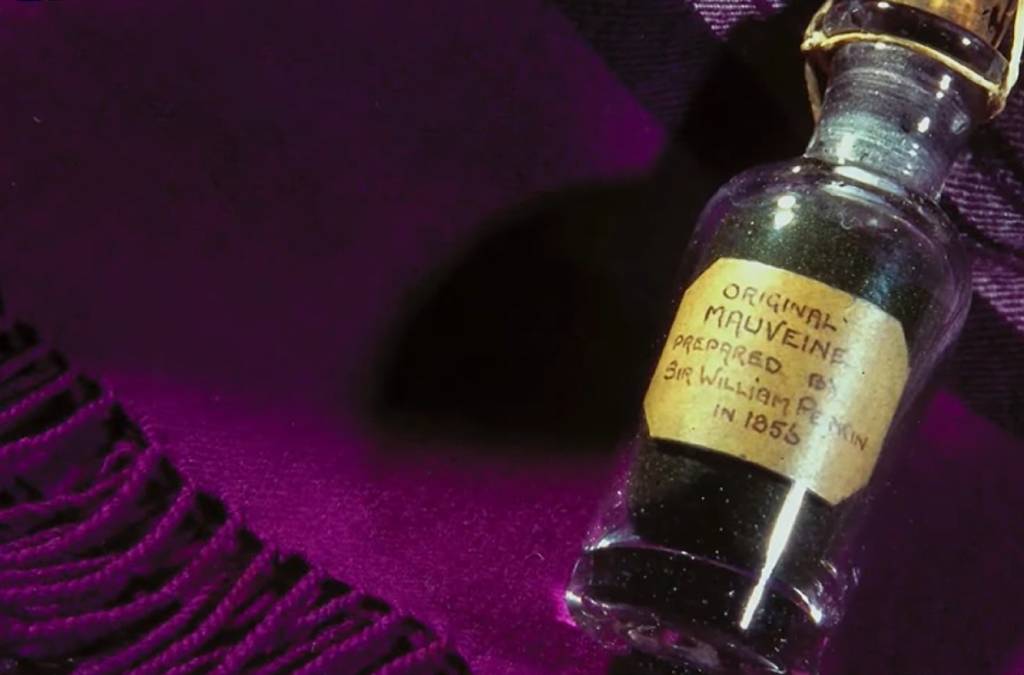
Can a failed scientific experiment change the course of fashion history? In 1856, it did. And the young man behind the discovery that made purple fashionable across Europe had no intention of entering the textile industry.
At just 18, William Henry Perkin was attempting to synthesise quinine, a substance used to treat malaria. His experiment failed to produce the medicine, but instead he discovered a substance capable of dyeing silk a beautiful shade of purple.
The discovery became known as mauveine, the first commercially successful synthetic dye. Within two years, the new colour was fashionable, with Queen Victoria herself among those who embraced it.
Perkin's discovery laid the foundation for the industrial production of synthetic organic dyes.
We previously shared the story of purple rib knit and the ancient purple dye once reserved for the privileged few. Historically, this precious colour was extracted from marine molluscs. The arrival of synthetic dyes eventually made an extraordinary range of shades available to textile manufacturers.
Today, achieving the right colour requires the expertise of an entire team.
In our laboratory, Global Textile specialists develop formulations for dyeing knitted fabric, conduct tests and work to achieve precise colour matching.
Every colour must match the approved sample and remain consistent across production batches.
Perkin was fortunate enough to get it right once. Our laboratory team has to get the shade right with every new batch.